
The Future of Building Management is Wireless
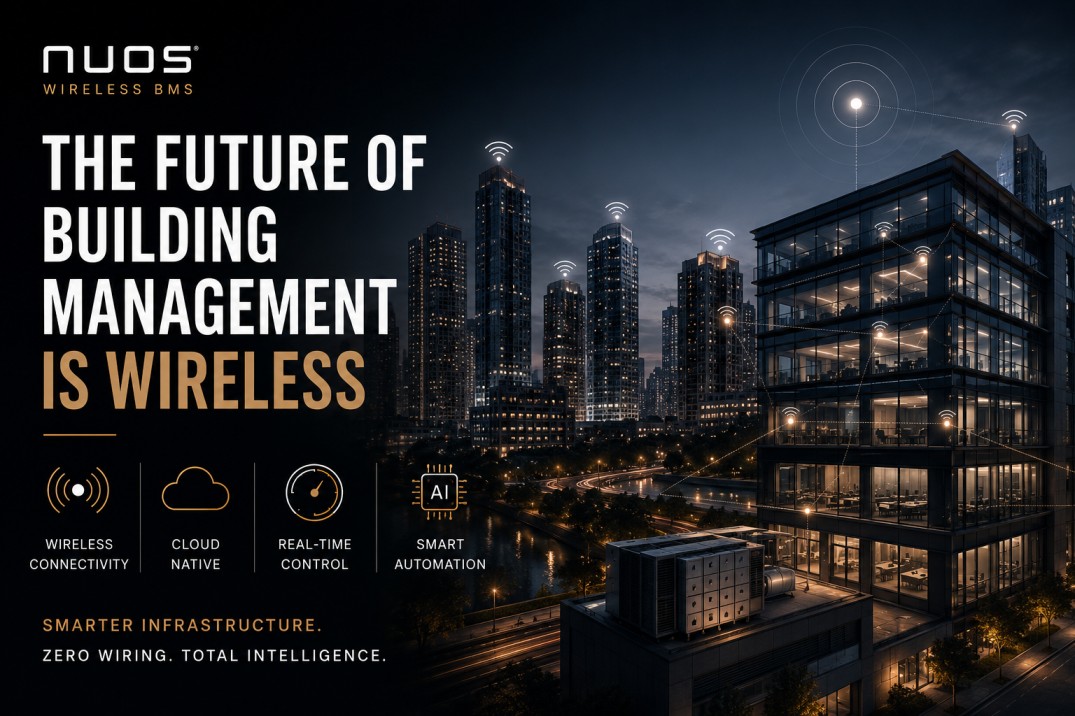
The way buildings are managed is changing rapidly. As businesses demand greater efficiency, lower operating costs, and smarter automation, traditional wired Building Management Systems (BMS) are being replaced by wireless solutions. Wireless BMS technology provides the flexibility, scalability, and intelligence needed to meet the demands of modern commercial buildings, making it the future of smart facility management. Wireless systems reduce installation complexity, simplify upgrades, and enable real-time monitoring without the limitations of extensive cabling.
Unlike conventional systems that require extensive wiring throughout a building, wireless BMS uses advanced IoT sensors and secure wireless communication to monitor and control critical systems such as HVAC, lighting, energy meters, water systems, indoor air quality, and occupancy. This allows facility managers to access live building data from anywhere through cloud-based dashboards, enabling faster decision-making and proactive maintenance.
One of the biggest advantages of wireless building management is easy installation. Existing buildings often face challenges when upgrading to modern automation because rewiring is expensive, disruptive, and time-consuming. Wireless solutions eliminate these barriers, allowing businesses to retrofit older buildings without major structural changes. This makes digital transformation more affordable while minimizing downtime.
Wireless BMS also supports predictive maintenance by continuously collecting performance data from connected equipment. Instead of waiting for systems to fail, facility managers receive alerts when equipment shows signs of wear or abnormal operation. This helps reduce unexpected breakdowns, extend equipment life, and lower maintenance costs.
Energy efficiency is another major benefit. By continuously monitoring energy consumption, occupancy patterns, and environmental conditions, wireless systems automatically optimize lighting, cooling, and heating operations. The result is lower utility bills, improved occupant comfort, and reduced carbon emissions—key priorities for sustainable building management.
As buildings become smarter, scalability becomes essential. Wireless BMS allows new sensors, devices, and automation features to be added without extensive rewiring, making future expansion simple and cost-effective. Whether managing a single office or a portfolio of commercial properties, wireless infrastructure grows alongside business needs.
At NUOS BMS, wireless building management solutions empower organizations to create intelligent, connected, and energy-efficient facilities. By combining cloud technology, IoT connectivity, and real-time analytics, NUOS BMS helps businesses improve operational efficiency while preparing their buildings for the future. Wireless is no longer just an upgrade—it is the foundation of next-generation building management.