Comments Off on Smart Building Automation: The Role of IoT in Modern BMS
Introduction
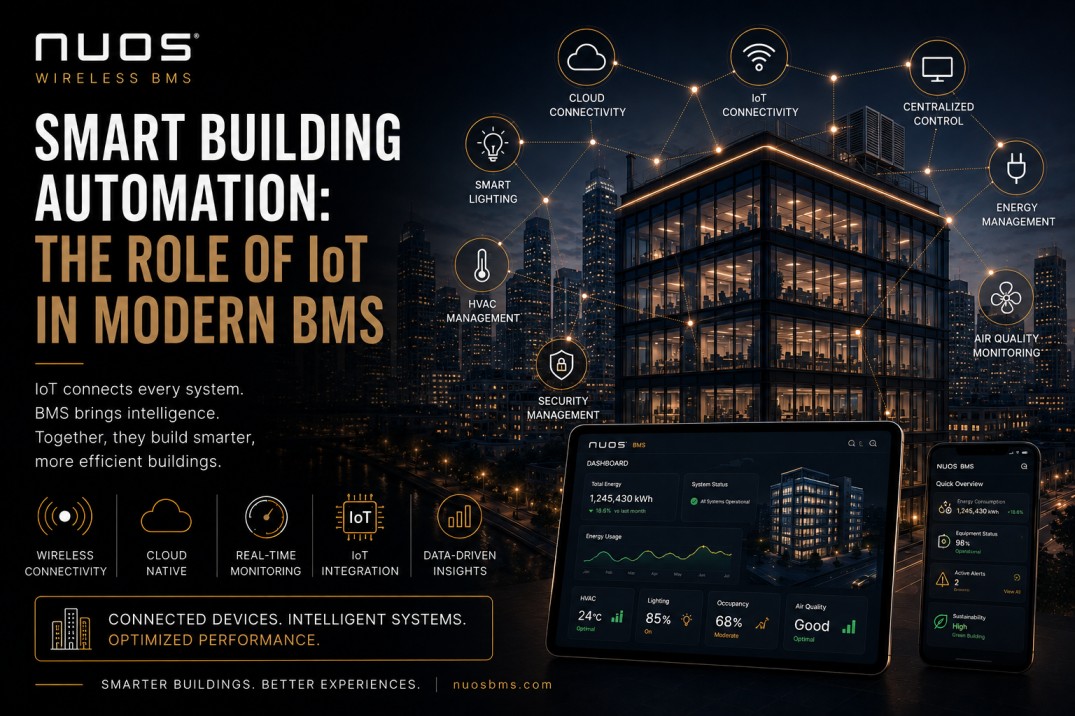
The Internet of Things (IoT) is transforming the way modern buildings operate. By connecting sensors, equipment, and control systems, IoT enables buildings to collect and exchange real-time information. When integrated with a Building Management System (BMS), this technology creates a smarter and more responsive environment. NUOS BMS combines intelligent building automation with connected technology to help businesses manage their facilities more efficiently.
Connecting Building Systems Through IoT
Traditional building systems often operate independently, making it difficult for facility managers to get a complete view of building performance. IoT-enabled BMS connects multiple systems through smart sensors and devices.
Temperature, occupancy, energy consumption, indoor air quality, lighting, and equipment performance can be monitored through a centralized management platform. This connected approach allows facility teams to understand what is happening across the building in real time.
Automated Decision-Making
One of the major advantages of IoT in BMS is automation. Sensors continuously collect information and enable building systems to respond according to actual conditions.
For example, lighting can be adjusted based on occupancy, while HVAC systems can respond to changes in temperature or room usage. This reduces manual intervention and helps ensure that building resources are used efficiently.
Improving Energy Efficiency
IoT technology provides detailed information about how energy is consumed. Facility managers can identify inefficient equipment, unnecessary usage, and areas where energy-saving measures can be implemented.
NUOS BMS can help organizations use this information to optimize building operations, reduce energy waste, and support long-term sustainability goals.
Predictive Maintenance and Better Performance
Connected sensors can also play an important role in equipment maintenance. By monitoring equipment performance continuously, a modern BMS can help identify unusual operating conditions.
Early alerts allow maintenance teams to investigate potential issues before they lead to major breakdowns. This can reduce downtime, improve equipment reliability, and extend asset life.
Flexible and Future-Ready Automation
IoT-based wireless BMS solutions offer greater flexibility when buildings need to expand or upgrade their automation systems. New sensors and connected devices can be integrated as requirements change, reducing the need for extensive rewiring.
Conclusion
IoT is becoming an essential part of modern building automation. By connecting building systems, collecting real-time data, and enabling intelligent control, it helps create efficient and responsive facilities. NUOS BMS uses connected technology to support smarter building management, better energy performance, and a more sustainable future.