Comments Off on How Wireless BMS Helps Buildings Reduce Energy Costs
Introduction
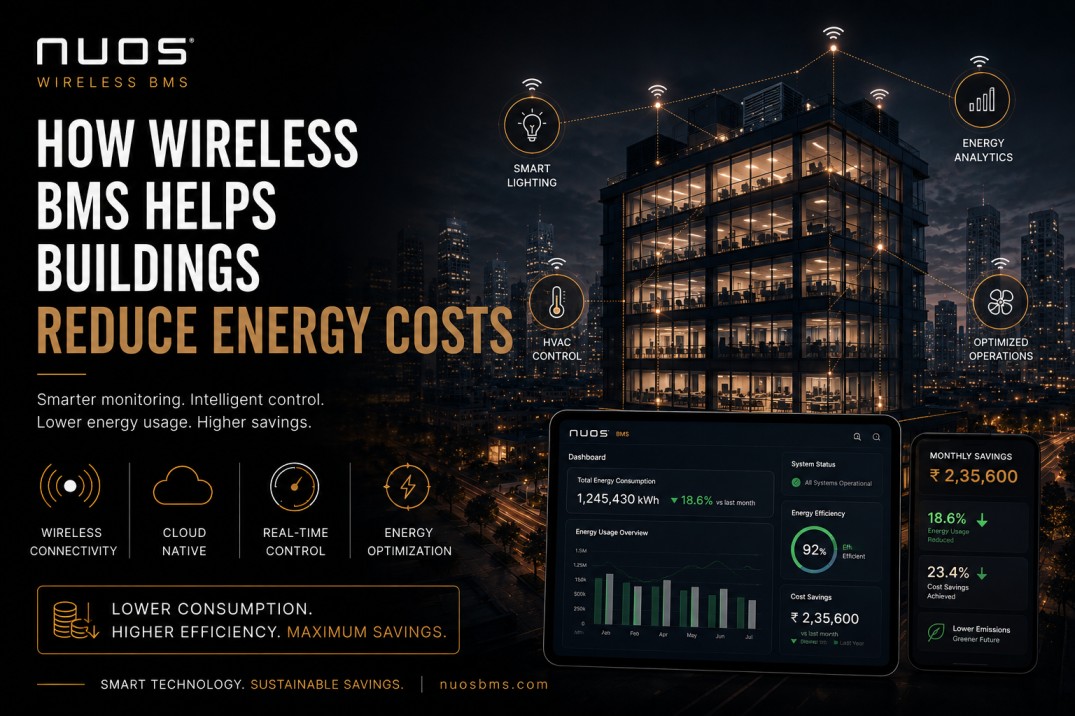
Energy consumption is one of the biggest operating expenses for modern commercial buildings. Heating, ventilation, air conditioning, lighting, and other building systems can consume significant amounts of energy when they are not properly monitored and controlled. A Wireless Building Management System (BMS) provides a smarter way to manage these systems while helping businesses improve energy efficiency and reduce costs.
Real-Time Energy Monitoring
A wireless BMS connects sensors and smart devices throughout a building to collect real-time information about energy consumption, temperature, occupancy, and equipment performance. This data helps facility managers understand where energy is being used and identify areas of unnecessary consumption.
With NUOS BMS, building operators can monitor important parameters through a centralized platform. Real-time information makes it easier to identify unusual energy usage and take corrective action before costs increase.
Intelligent HVAC Management
HVAC systems are often among the largest energy consumers in commercial buildings. Wireless automation can help optimize heating and cooling based on occupancy, temperature, and operating schedules.
Instead of running HVAC equipment continuously, smart controls can automatically adjust settings according to actual building requirements. This approach helps reduce energy waste while maintaining a comfortable indoor environment.
Smarter Lighting Control
Lighting is another area where wireless BMS technology can make a significant difference. Connected occupancy and light sensors can help ensure that lighting is used only when and where it is needed.
Lights can be automatically adjusted or switched off in unoccupied areas, helping businesses reduce unnecessary electricity consumption without affecting productivity or occupant comfort.
Reduced Maintenance and Operating Costs
Wireless BMS does more than monitor energy. It can also provide valuable information about equipment performance. Early detection of abnormal operation allows maintenance teams to address potential problems before they become expensive failures.
Because wireless systems require less cabling, they can also simplify installation and make upgrades easier, particularly in existing buildings.
A More Sustainable Building Future
Energy efficiency is becoming increasingly important as organizations focus on sustainability and operational savings. Wireless BMS gives businesses the tools to monitor, automate, and optimize building performance.
Conclusion
NUOS BMS helps transform conventional buildings into smarter, more energy-efficient environments through wireless connectivity, intelligent monitoring, and automation. By optimizing HVAC, lighting, and other systems, businesses can reduce energy waste, control operating expenses, and create more sustainable buildings.