
Why Wireless BMS is Ideal for Modern Building Retrofits
Introduction
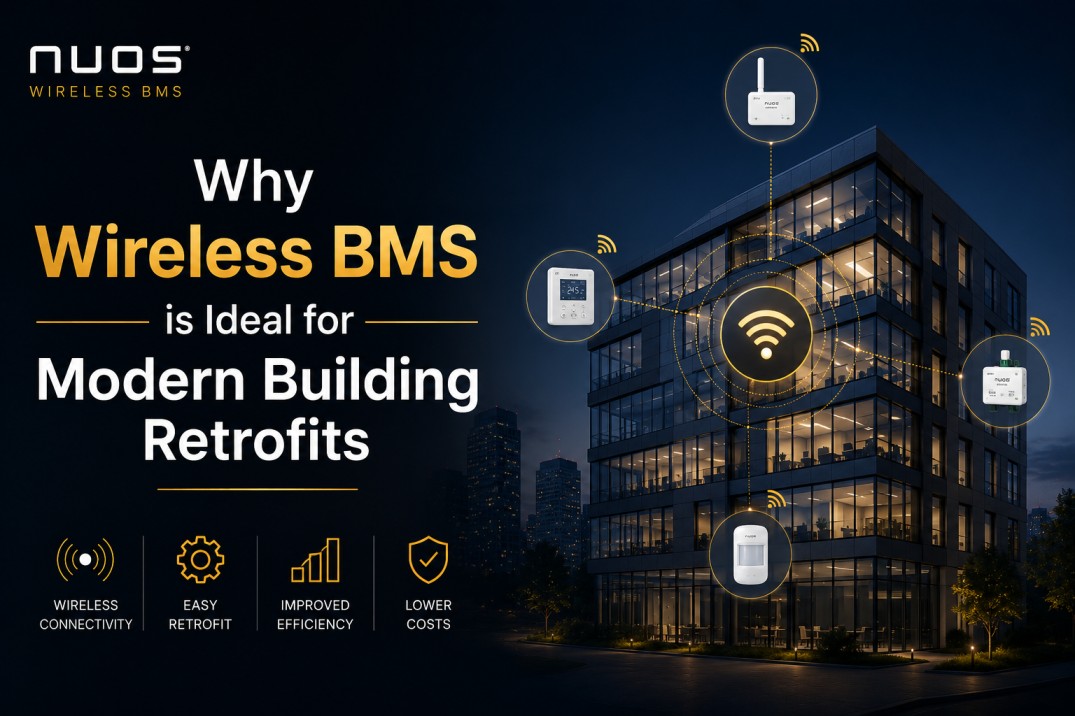
Upgrading an existing building with modern automation can be challenging when traditional wired systems require extensive cabling and structural modifications. Wireless Building Management Systems offer a more flexible alternative. With minimal disruption and scalable technology, NUOS BMS can help modernize existing buildings while improving efficiency, monitoring, and control.
Simplifying Building Upgrades
Traditional BMS installations often involve running cables through walls, ceilings, and other building areas. In an occupied building, this can create significant disruption and increase installation costs.
Wireless BMS reduces the need for extensive cabling. Sensors and smart devices can communicate wirelessly, making it easier to introduce modern building automation into existing facilities.
Reduced Installation Disruption
Building retrofits need to minimize interruptions to daily operations. Wireless technology can simplify installation and reduce the amount of construction work required.
This makes wireless BMS particularly useful for offices, commercial properties, educational facilities, hotels, and other buildings where continuous operation is important.
Flexible System Expansion
Building requirements can change over time. A business may need additional monitoring points, new sensors, or improved automation as its operations expand.
Wireless BMS provides flexibility to add connected devices without major rewiring. This makes the system easier to scale according to changing building requirements.
Better Monitoring of Existing Systems
A retrofit is not only about installing new equipment. It is also about understanding how existing systems perform. Wireless sensors can monitor temperature, occupancy, energy consumption, air quality, and equipment conditions.
This information gives facility managers greater visibility and helps them identify opportunities for improvement.
Improving Energy Performance
Modernizing an existing building with wireless automation can also support energy-saving initiatives. HVAC, lighting, and other systems can be monitored and controlled based on real-time conditions.
By reducing unnecessary operation, businesses can improve efficiency while working toward their sustainability goals.
Conclusion
Wireless BMS offers a practical approach to modern building retrofits. By reducing cabling requirements, minimizing disruption, and supporting scalable automation, NUOS BMS helps existing buildings move toward smarter and more efficient operations.