
Wireless BMS vs Traditional BMS: Which Is Better for Your Building?
Introduction
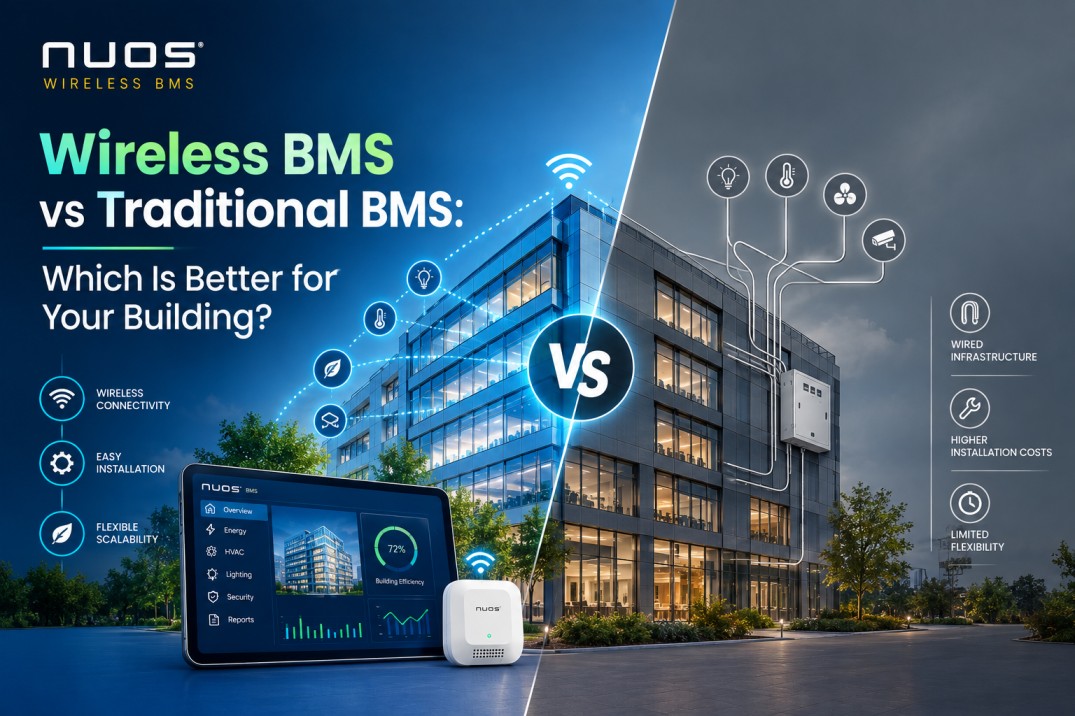
Building Management Systems help organizations monitor and control essential building operations. While traditional BMS solutions depend heavily on wired connections, wireless BMS uses modern wireless communication to connect sensors and devices. Understanding the differences can help businesses select the right solution for their facility.
Installation and Cabling
Traditional BMS installations can require extensive cabling throughout a building. This can increase installation time, labor requirements, and project complexity.
Wireless BMS reduces the need for physical cables, making installation simpler and particularly useful for existing buildings where extensive rewiring may not be practical.
Flexibility and Scalability
Building needs can change over time. Traditional systems may require additional wiring when new devices or monitoring points are introduced.
Wireless systems offer greater flexibility because additional sensors and connected devices can be integrated more easily. This makes wireless BMS a scalable option for growing facilities.
Monitoring and Automation
Both wired and wireless BMS technologies can provide monitoring and automation capabilities. Modern wireless solutions can connect HVAC, lighting, occupancy, energy, and environmental sensors through a centralized platform.
NUOS BMS helps facility managers access real-time information and manage building operations through intelligent automation.
Retrofit Applications
Wireless BMS can be particularly beneficial for retrofit projects. Existing buildings often have structural limitations that make new cabling difficult and disruptive.
Wireless technology can help introduce modern automation while reducing the need for major construction work.
Cost and Long-Term Value
The total cost of a BMS depends on building size, system requirements, installation, maintenance, and future expansion. Wireless systems can reduce cabling and installation complexity, while their scalability may also make future upgrades easier.
Conclusion
Traditional BMS still has an important role in many applications, but wireless technology provides significant advantages in flexibility, retrofit installation, and scalability. For businesses looking to modernize building management, NUOS BMS offers a smart approach to connected and efficient facility operations.