
The Role of Smart Sensors in Modern Building Automation
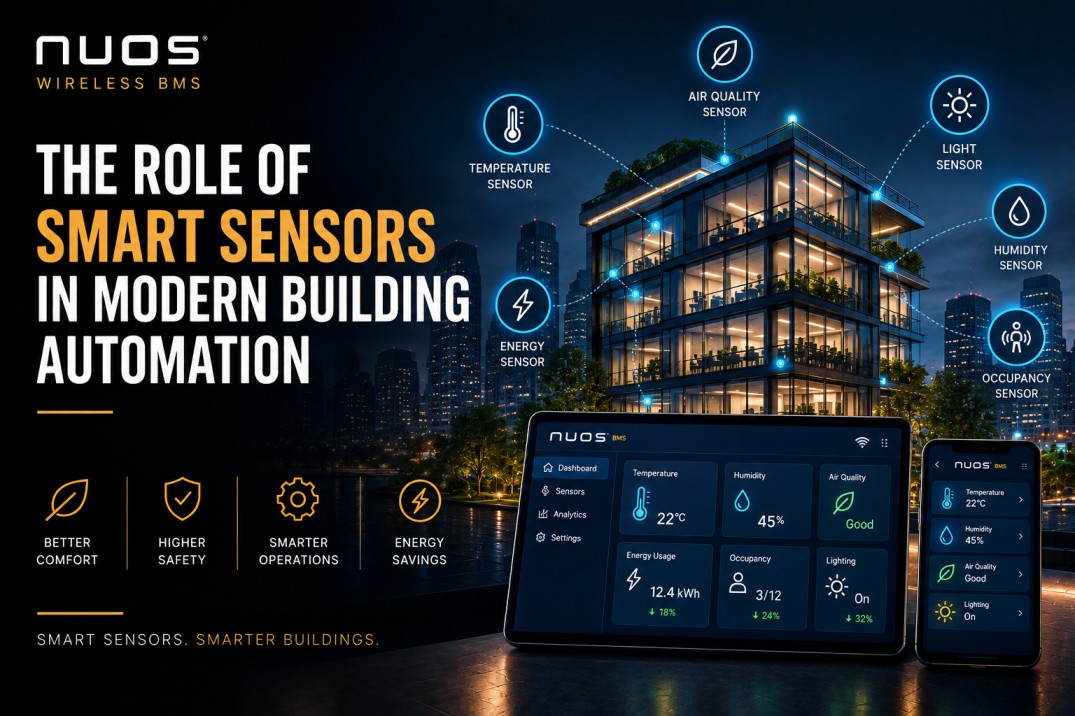
Smart sensors are becoming an essential part of modern building automation. They provide real-time information that allows Building Management Systems to respond intelligently to changing conditions. From occupancy and temperature to energy usage and air quality, sensors provide the data needed to make buildings more efficient and responsive.
Monitoring Building Conditions
Smart sensors continuously monitor important environmental and operational parameters. Temperature sensors can track indoor conditions, while occupancy sensors identify how spaces are being used.
This information provides facility managers with valuable insights into building performance.
Automating HVAC Systems
HVAC systems can consume substantial amounts of energy. Smart sensors allow automated controls to respond to real-time temperature and occupancy conditions.
Instead of operating at a fixed level throughout the day, HVAC systems can adjust according to actual requirements, helping improve efficiency and occupant comfort.
Optimizing Lighting
Smart occupancy and daylight sensors can help control lighting automatically. Areas that are not occupied can have their lighting reduced or switched off, while lighting can be adjusted according to available natural light.
This helps reduce unnecessary electricity consumption.
Supporting Indoor Air Quality
Indoor air quality is another important aspect of modern building management. Sensors can monitor environmental conditions and provide information that helps facility managers maintain healthier and more comfortable indoor spaces.
Data-Driven Maintenance
Smart sensors can monitor equipment conditions and identify unusual patterns. This can provide early warnings of potential issues and help maintenance teams respond proactively.
By using sensor data, businesses can reduce unexpected downtime and improve equipment reliability.
Conclusion
Smart sensors provide the foundation for intelligent building automation. When connected with a centralized platform such as NUOS BMS, they enable real-time monitoring, automated control, energy optimization, and proactive maintenance. As buildings become more connected, smart sensors will play an increasingly important role in creating efficient and sustainable facilities.