
How Wireless BMS Supports Energy-Efficient Building Operations
Introduction
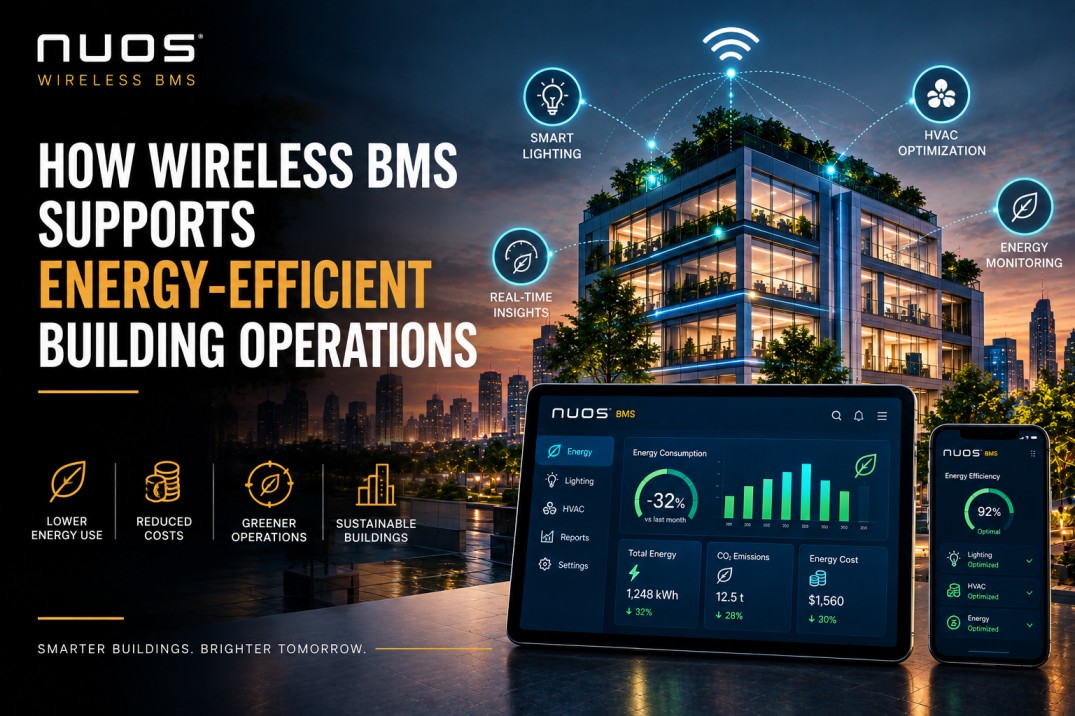
Energy efficiency has become a major priority for modern commercial and industrial facilities. Rising energy costs, sustainability targets, and increasing operational demands are encouraging businesses to adopt smarter building technologies. A Wireless Building Management System (BMS) provides an intelligent way to monitor, automate, and optimize building operations while reducing unnecessary energy consumption.
Real-Time Building Monitoring
A wireless BMS uses connected sensors to collect real-time information about temperature, occupancy, energy consumption, air quality, and equipment performance. This information gives facility managers a clear understanding of how different areas of a building are operating.
With centralized monitoring, operators can identify unusual energy consumption and take corrective action quickly. This data-driven approach reduces dependence on manual inspections and helps organizations make better operational decisions.
Smarter HVAC Management
Heating, ventilation, and air conditioning systems can account for a significant portion of building energy usage. Wireless BMS technology allows HVAC systems to respond to occupancy, temperature, and environmental conditions.
Instead of operating continuously at fixed settings, HVAC equipment can be adjusted according to actual requirements. This can reduce unnecessary heating and cooling while maintaining a comfortable indoor environment.
Intelligent Lighting Control
Wireless sensors can also improve lighting efficiency. Occupancy and daylight sensors can determine when spaces are being used and whether artificial lighting is necessary.
Lights can automatically be adjusted or switched off in unoccupied areas, helping reduce electricity consumption without requiring constant manual intervention.
Proactive Equipment Management
Energy efficiency also depends on equipment performance. A wireless BMS can monitor connected systems and identify unusual operating patterns. Early alerts can help maintenance teams investigate potential problems before they become major failures.
Better equipment performance can reduce energy waste, improve reliability, and extend asset life.
Supporting Sustainable Buildings
Wireless BMS solutions can contribute to wider sustainability objectives by helping organizations measure and optimize resource consumption. The ability to monitor building performance continuously makes it easier to identify long-term opportunities for improvement.
Conclusion
Wireless BMS is becoming an important technology for energy-efficient building operations. By combining real-time monitoring, intelligent automation, and connected sensors, NUOS BMS helps businesses create smarter, more efficient, and sustainable facilities.