
Why Smart Buildings Need Advanced Wireless BMS Solutions
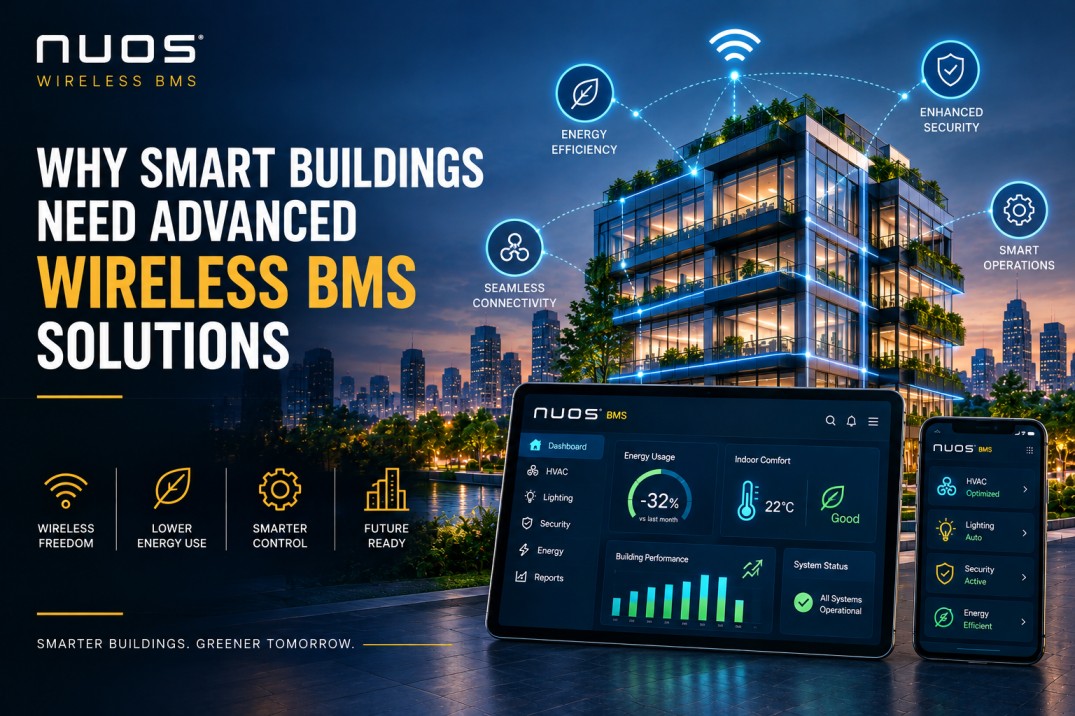
Modern buildings are becoming increasingly connected. From HVAC and lighting to occupancy monitoring and energy management, multiple systems need to work together efficiently. Advanced Wireless BMS solutions provide the connectivity and automation required to manage these systems through a centralized platform.
Moving Beyond Traditional Building Management
Traditional building management systems can require extensive cabling and infrastructure. This can make installation and future modifications complicated, particularly in existing buildings.
Wireless technology provides an alternative approach by allowing sensors and devices to communicate without extensive wiring. This simplifies deployment and provides greater flexibility for modern facilities.
Centralized Building Control
An advanced BMS can bring multiple building functions together within one management environment. Facility managers can monitor HVAC performance, lighting, energy usage, occupancy, and environmental conditions from a centralized interface.
This visibility helps operators understand building performance and respond quickly when adjustments are required.
Improving Energy Efficiency
Smart buildings need to use energy intelligently. Wireless BMS solutions can collect data from connected sensors and use that information to optimize building systems.
For example, HVAC and lighting can be adjusted according to occupancy and operating conditions. This helps minimize unnecessary energy consumption while maintaining occupant comfort.
Flexible for Future Requirements
Building requirements change over time. Businesses may expand, change layouts, or introduce new technologies. A wireless BMS provides scalability by making it easier to add sensors and connected devices without major rewiring.
This flexibility allows building automation systems to evolve alongside operational needs.
Supporting Facility Managers
Managing a large facility involves monitoring numerous systems and responding to operational issues. Advanced wireless BMS technology provides real-time information that helps facility managers prioritize tasks and make informed decisions.
Automated alerts can also help identify unusual equipment conditions and potential maintenance requirements.
Conclusion
Smart buildings require intelligent systems capable of connecting, monitoring, and controlling different building functions. NUOS BMS combines wireless connectivity, automation, and real-time monitoring to help organizations build smarter, more efficient, and future-ready facilities.