
The Benefits of Wireless BMS for Commercial Building Management
Introduction
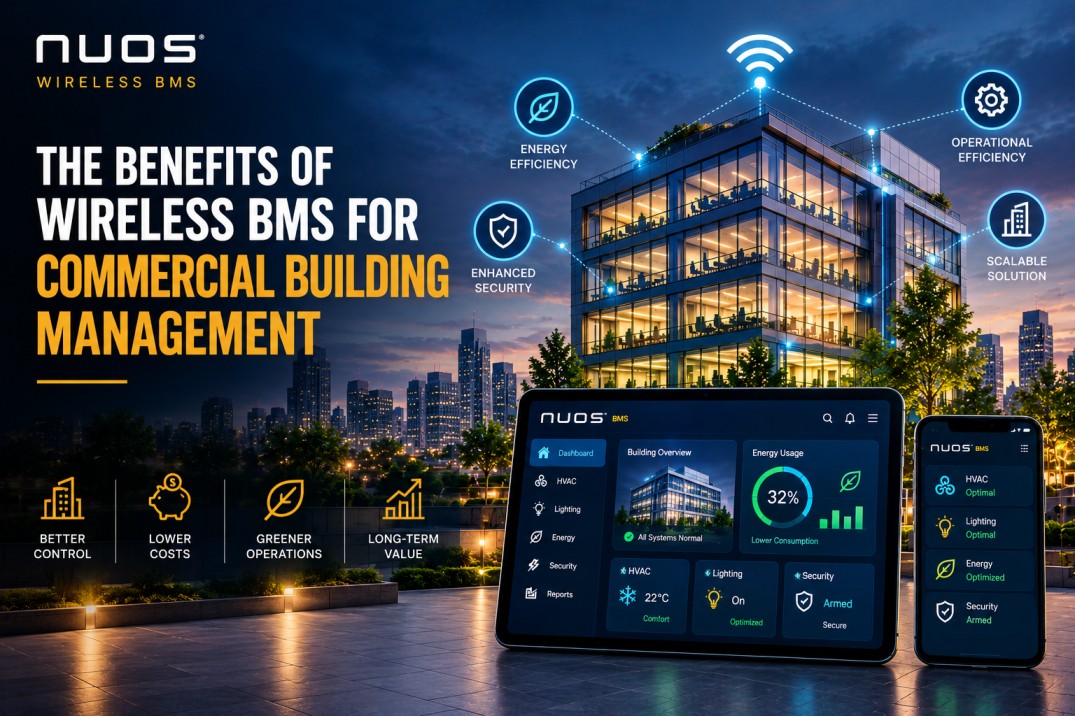
Commercial buildings contain numerous systems that must operate efficiently every day. HVAC, lighting, energy management, ventilation, and other services all contribute to building performance. A Wireless BMS provides a centralized way to monitor and control these systems while offering greater flexibility than conventional wired infrastructure.
Simplified Installation
One of the major advantages of wireless BMS is reduced dependence on extensive cabling. Traditional systems may require cables to be installed across walls, ceilings, and other building areas.
Wireless technology can simplify installation, particularly in existing commercial properties where structural modifications may be disruptive.
Centralized Monitoring
Facility managers need accurate information to manage commercial buildings effectively. A wireless BMS can collect data from multiple sensors and systems and present it through a centralized platform.
This helps operators monitor building conditions, identify issues, and make informed operational decisions.
Improved Energy Efficiency
Commercial facilities can consume substantial amounts of energy. Wireless BMS technology can help optimize HVAC and lighting based on occupancy, temperature, and operating schedules.
By reducing unnecessary operation, businesses can improve energy efficiency while maintaining a suitable environment for employees and visitors.
Easier Expansion and Upgrades
Commercial buildings can change significantly over time. New departments, additional floors, or changes in building layouts may require additional monitoring and automation.
Wireless BMS provides scalability, making it easier to introduce new sensors and connected devices without extensive rewiring.
Proactive Maintenance
Equipment problems can affect both operational efficiency and occupant comfort. Wireless BMS can continuously monitor connected equipment and provide alerts when unusual conditions are detected.
This allows maintenance teams to respond proactively and potentially reduce unexpected downtime.
Supporting Modern Facility Management
As commercial buildings become more technology-driven, facility managers need systems that provide visibility, automation, and flexibility. Wireless BMS helps bring these capabilities together in one connected environment.
Conclusion
Wireless BMS provides commercial buildings with a flexible approach to monitoring, automation, energy management, and maintenance. With NUOS BMS, organizations can move toward smarter building operations while preparing their facilities for future technology requirements.