
How IoT and Wireless BMS Work Together for Smarter Buildings
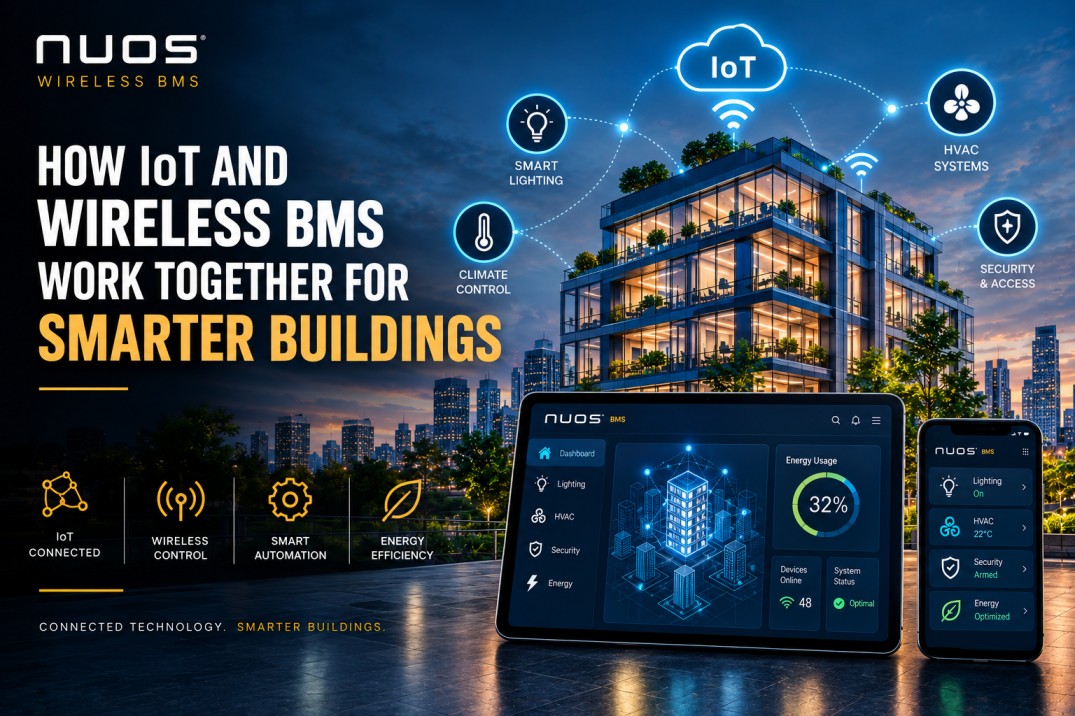
The Internet of Things (IoT) is changing the way buildings collect and use information. By connecting sensors, equipment, and control systems, IoT enables buildings to respond intelligently to changing conditions. When combined with a Wireless Building Management System, IoT can create a more connected and efficient building environment.
Connecting Building Devices
IoT sensors can collect information about temperature, humidity, occupancy, energy consumption, air quality, and equipment performance. Wireless connectivity allows these devices to communicate with a central BMS without requiring extensive physical cabling.
This creates a continuous flow of building data that facility managers can use to understand operational performance.
Real-Time Monitoring
One of the key benefits of combining IoT with wireless BMS is real-time monitoring. Facility managers can see current building conditions and identify changes as they occur.
For example, occupancy data can help determine whether specific spaces are being used, while temperature sensors can provide information about indoor comfort levels.
Intelligent Automation
IoT data becomes even more valuable when connected to automation. Building systems can respond to information received from sensors.
Lighting can be adjusted according to occupancy, while HVAC systems can respond to temperature and usage patterns. These automated actions can improve efficiency while reducing manual intervention.
Better Energy Management
Energy consumption can be difficult to manage without accurate data. IoT-enabled wireless BMS provides detailed information about how and when energy is being used.
This allows facility teams to identify inefficient operations and optimize systems accordingly. Over time, these improvements can support lower energy consumption and more sustainable building operations.
Supporting Predictive Maintenance
Connected sensors can also provide valuable information about equipment health. Changes in operating conditions can indicate potential equipment problems.
By identifying these changes early, maintenance teams can investigate issues before they result in unexpected downtime or costly repairs.
Conclusion
IoT and wireless BMS technologies complement each other by connecting physical building systems with intelligent digital management. NUOS BMS helps organizations use connected sensors, automation, and real-time data to create smarter, more responsive, and energy-efficient buildings.